How do you want camera recordings stored?
No votes yet. Yours will be the first. · saved on this device
Loading...
Home Control Notes · Service guide
Home security and surveillance covers cameras, door and window sensors, motion detection, video doorbells and smart locks, with or without a monitoring service. It suits owners who have decided what to watch, who gets alerts, and how recordings are stored. Costs run from a few hundred dollars for a doorbell and lock to several thousand for wired cameras with a recorder.
Security is the category owners rate as essential rather than nice to have. SafeWise's 2025 State of Safety survey found ~50% of U.S. households use security cameras and one in three has a full system, and Parks Associates counts a video doorbell in 20% of internet households. Access control is younger: only 11% according to Parks Associates' 2026 release.
The decisions that outlast the hardware are storage, accounts and response. Where do recordings live, who can view them, what happens when the subscription or the internet stops, and who acts when an alert arrives at two in the morning? This page covers coverage planning, the local-versus-cloud storage choice, monitoring fees, smart locks and privacy rules, with 2026 price ranges and what to require in a written estimate.
Want the numbers only? Read the home security & surveillance cost guide for 2026 ranges, what moves the price, and sample budgets.
| Item | Low | High | Unit | Notes |
|---|---|---|---|---|
| Video doorbell, installed | $100 | $300 | per unit | HomeAdvisor 2026; a transformer upgrade adds to this |
| Smart lock, installed | $200 | $550 | per lock | |
| Wired IP camera, installed | $100 | $500 | per camera | HomeAdvisor 2026, includes cable run |
| Wireless IP camera, installed | $100 | $250 | per camera | HomeAdvisor 2026 |
| Network video recorder | $150 | $500 | flat | HomeAdvisor 2026 |
| Door/window and motion sensors | $20 | $60 | per sensor | |
| Professional monitoring | $30 | $60 | per month | SoFi 2025 |
| Camera installation, typical project | $589 | $2,040 | flat | HomeAdvisor 2026, average $1,289 |
| Full security subsystem | $500 | $5,000 | flat | Today's Homeowner, January 2023 prices |
Start with the risk you are addressing. Package theft and knowing who is at the door call for a video doorbell and a smart lock, a few hundred dollars installed. Frequent travel, a detached garage or a history of break-ins call for perimeter sensors, exterior cameras and possibly monitoring. Parks Associates found smart lock ownership hits 25% vs 3% in homes with a security system versus 3% without, which shows how naturally locks bundle with a system.
Moving is the strongest trigger. Parks Associates reports >50% of households planning a move intend to buy a smart lock, and a move is the moment to rekey, wire the doorbell transformer and plan camera runs before furniture arrives. If you are unsure of scope, the quiz and the whole-home page help place security inside a larger plan.
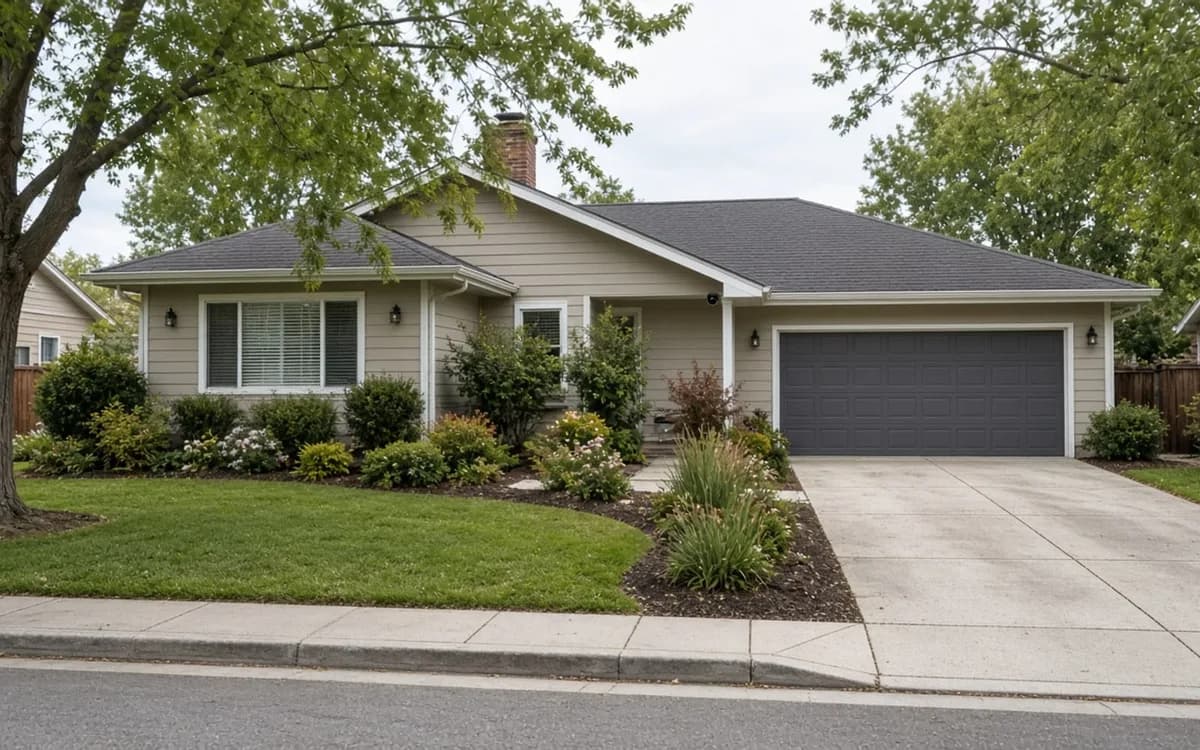
Cover entry points and approaches, not the whole yard. A front door camera, a driveway or garage camera, and a rear entry camera handle most single-family homes. Mount exterior cameras high enough to avoid tampering but low enough to capture faces, typically eight to ten feet. Aim away from neighbors' windows and public sidewalks where local rules restrict recording. Indoor cameras should be limited to shared spaces and should have a physical shutter or an easy off schedule when the household is home.
Wired power-over-Ethernet cameras are more reliable than battery Wi-Fi models at the property edge, where Wi-Fi is weakest. They cost more to install because each run is a cable pull, but they never need charging and they record continuously to a local recorder. Battery cameras suit rentals, outbuildings and spots where a cable cannot reach. Ask the pro to mark proposed camera positions on a sketch with their field of view.
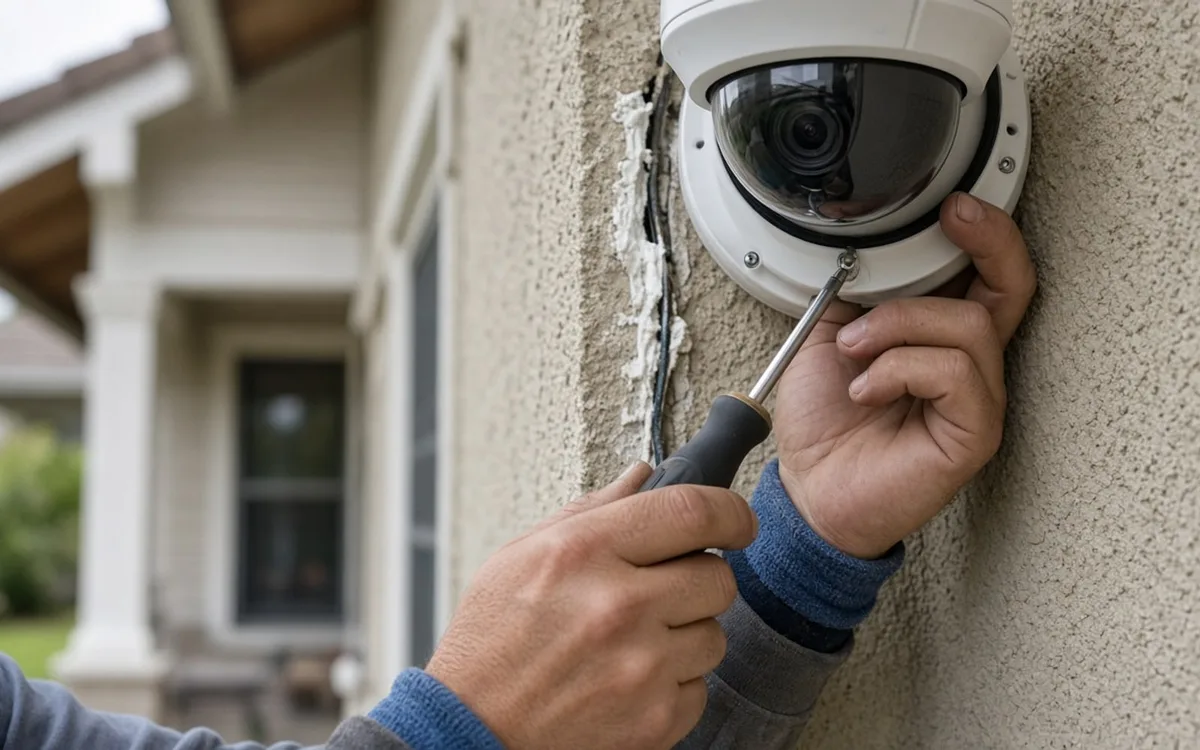
Cloud storage is simple and works from anywhere, but it stops when the subscription lapses and usually when the internet drops. Local recording to a base station or network video recorder keeps footage on site, keeps recording through an outage, and has no monthly fee, at the cost of a recorder and the responsibility of backing it up. Many households combine both: local for continuous recording, cloud for clips and remote access.
SoFi's 2025 guide pegs general smart home subscriptions at $10–$50 a month and professional monitoring at $30–$60/mo. Over five years, a $15 camera subscription is $900, which buys a good recorder. The local versus cloud comparison lays out the trade-offs, and any estimate should state exactly which functions stop if you cancel each service.
| Storage approach | Upfront | Monthly | Works offline? | Watch for |
|---|---|---|---|---|
| Cloud only | Low | $3–$20 per camera or plan | No | Footage lost if subscription lapses |
| Local base station or NVR | $150–$800 | $0 | Yes | Needs backup and a UPS |
| Hybrid local plus cloud clips | Medium | $3–$15 | Partly | Two accounts to manage |
Monitoring means a service watches your alarm and dispatches police or fire on a verified event. It costs $30–$60/mo and is usually required for the largest insurance discounts. Self-monitoring sends alerts to your phone and leaves the response to you. Households with someone always reachable, or who mostly want video, often choose self-monitoring; households that travel or have older members often prefer monitoring. Many jurisdictions require alarm permits and fine false alarms, so ask the pro about local rules.
Insurance discounts are worth checking before deciding. Nationwide offers up to 10% off fire, theft and water coverage with eligible devices, and SmartFinancial's roundup puts typical carrier discounts at 5–13%, with Allstate and American Family at 5% and Hippo at 10–13%. Some carriers require monitored systems; others accept self-monitored sensors. Call your carrier with model numbers before ordering.
A smart lock earns its place when it stores codes on the lock itself and keeps a mechanical key override, so it opens with no network, no phone and no subscription. Retrofit models replace the interior thumb-turn and keep your exterior keyway; full-replacement models change the whole deadbolt. Check the door alignment first, since a deadbolt that binds will drain batteries and fail. Expect $150 to $400 per lock plus installation.
Codes and accounts need a plan. Each household member gets a code; cleaners and dog walkers get scheduled codes that expire; the installer gets nothing permanent. The lock account should be in your name with two-factor authentication. Parks Associates found only 11% of internet households have a smart lock, so most installers are adding one for the first time in a home and should walk you through code management before leaving.
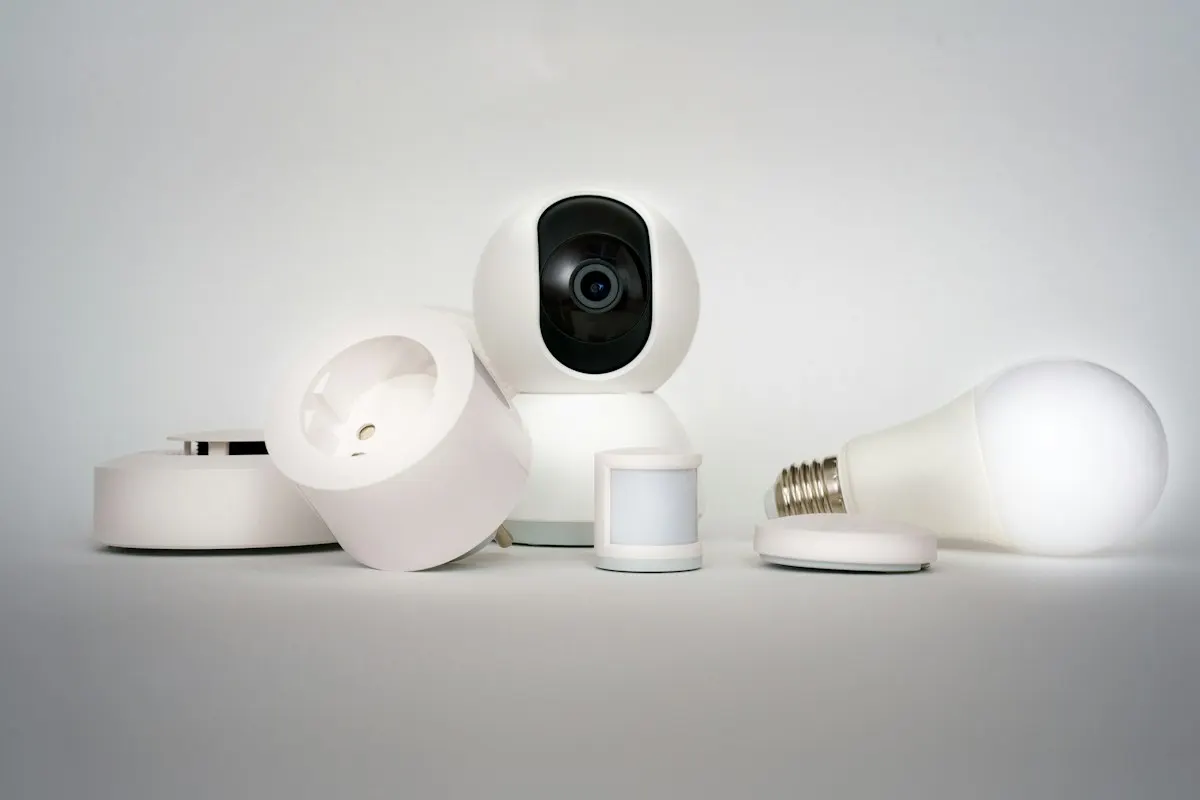
HomeAdvisor's June 2026 guide puts a professionally installed camera system at $1,289 on average, with labor at $80–$200 per camera. Reolink, a camera maker, prices an eight-camera installation at $3,000 to $4,000. Sensors, a keypad and locks add to the camera figure, which is why Today's Homeowner's broader security range (January 2023 prices) runs from $500 to $5,000 or more. Battery camera systems cost less to install but more to maintain.
Recurring fees decide the five-year total. Add up cloud storage, monitoring and any dealer platform fees, then compare against a local recorder. Ask each bidder for a year-one and year-five cost so a low installation price built on subscriptions is visible. The calculator counts each camera, sensor and lock as a control point and includes a monitoring add-on.
Deloitte found 70% of consumers worry about connected-device privacy, and cameras are the sharpest case. The practical safeguards are a separate network segment for cameras, owner accounts with two-factor authentication, indoor cameras with physical shutters or off schedules, encrypted local storage, and a written statement of who can view recordings. Decline any installer who wants a standing remote-view login for support.
Common failures: Wi-Fi cameras that drop at the property edge, doorbell transformers too weak for a video doorbell, motion zones that include the street and generate constant alerts, and recorders without a battery backup. Each is fixable in the specification. Regional differences are modest; our analysis of the EIA's 2024 survey puts smart-speaker security, camera or lock control at 9.0% of homes nationally, from 7.5% in the Northeast to 9.7% in the South. See the locations page.
Line up camera count and type, recorder and storage, sensor count, lock models, monitoring terms, labor and recurring fees. Then compare outage behavior and account ownership. Ask what the system does during an internet outage, what stops if each subscription ends, how long recordings are kept, and how you export footage for police. A proposal that cannot answer those in writing is not ready to be compared. The contact page gives a request template.
Homeowner polls
No votes yet. Yours will be the first. · saved on this device
SoFi's 2025 guide puts professional monitoring at $30 to $60 a month.
No votes yet. Yours will be the first. · saved on this device
No votes yet. Yours will be the first. · saved on this device
 Service guideWhole-Home Automation
Whole-home automation connects lighting, climate, locks, cameras, shades and audio under one interface with scenes and schedules.
 Service guideSmart Lighting Control
Smart lighting control replaces switches and dimmers, or adds keypads and schedules, so rooms respond to scenes, timers and occupancy while the wall switch keeps working.
Many cities and counties require an alarm permit for any system that could trigger police dispatch, monitored or not, and some charge fines for false alarms after the first one or two. Cameras themselves rarely need a permit, but recording audio and pointing cameras at public areas is regulated in some states. Ask the installer which permits apply locally and who files them; a reputable pro will know the local ordinance.
Often not without an upgrade. Video doorbells typically need a 16–24 volt transformer rated around 30 volt-amps; many older homes have 10-volt-amp transformers that cause the doorbell to drop offline or fail to charge. A transformer replacement costs $100 to $200 installed. Have the pro measure voltage at the doorbell before ordering, or plan on a battery doorbell if there is no wiring at all.
Cloud plans typically keep clips 30 to 60 days. A local recorder keeps continuous footage until the drive fills, then overwrites the oldest; a 2-terabyte drive holds roughly two to four weeks of four cameras at typical settings. Decide how long you need and size the storage accordingly. For incidents, export the footage promptly, because both cloud and local systems will overwrite it.
Only if you grant video verification access, which some services use to confirm an alarm before dispatch. That access should be limited to alarm events and clearly described in the contract. Standing access to live video for 'support' is unnecessary and should be refused. Ask the provider in writing what they can view, when, and how the access log is available to you.
Yes, if you choose a model with a mechanical key override and, ideally, external contacts for a 9-volt battery to power it in an emergency. Most locks warn weeks in advance through the app and a light on the keypad. Batteries typically last six to twelve months, shorter if the deadbolt binds against a misaligned strike plate, so have the door adjusted at installation.
Set expectations before installation. Indoor cameras should be in shared spaces only, with schedules that disable them when people are home or a physical shutter. Tell guests and any workers that cameras are present; several states require notice for audio recording. Give household members their own user accounts rather than sharing one login, so access can be adjusted when circumstances change.
Wired power-over-Ethernet cameras are more reliable, record continuously and never need charging, and they are the right choice for permanent positions at entries and driveways. Wireless battery cameras make sense for outbuildings, rentals and spots a cable cannot reach, accepting periodic charging and motion-only recording. Many homes use both. The deciding factor is usually the cost of the cable run, which the pro can estimate on a walkthrough.
Frequently. Nationwide offers up to 10% off fire, theft and water coverage for eligible devices, and SmartFinancial lists Allstate and American Family at 5% and Hippo at 10–13%. Carriers differ on whether monitoring is required and which sensors qualify, and some also credit water leak and smoke sensors. Provide the model numbers and any monitoring certificate to your agent after installation.
 Free toolSmart home cost calculator: size a budget by control points
Size, material tier and complexity in, a realistic budget range out.
 Free toolSmart home comparisons: the five decisions that shape the project
Side-by-side tables for the decisions that change the price most.
 Free toolSmart home readiness quiz: do you know the details installers will ask about?
10 questions that show what you already know and what to check next.
 Free toolSmart home polls: how other homeowners weighed the same decisions
See what other planners chose and add your vote.
Tell us the size, the condition of what is there now, and what you want to change. Home Control Notes passes your request to independent local professionals, who reply with written, no-obligation estimates. The service is free to use.