Which approach are you leaning toward for your smart home?
Deloitte found fewer than a third of consumers have committed to a single ecosystem.
No votes yet. Yours will be the first. · saved on this device
Loading...
About Home Control Notes
Home Control Notes is an editorial planning resource for smart home projects. It publishes cost ranges, adoption figures and design guidance drawn from named public sources, then connects homeowners who want estimates with independent local installers. It does not install anything, does not employ crews, and does not rate or rank the professionals it matches.
Smart home advice online tends to come from two places: device makers selling a platform, and installers selling a package. Both have a point of view. This site exists to give a homeowner a third position, closer to a seasoned estimator's: what the work costs, what fails first, what to ask, and what to skip. Every figure links to its source, and the sources are named in the sentence so you can judge them yourself.
The matching side is simple. When you submit a request through the contact page, it goes to independent installers who serve your area and handle that scope. They respond with a free written estimate, and you decide whether to talk further. Nothing on this site is a booking, and no installer is endorsed. Read on for how the numbers are chosen and how to use the tools.
Three kinds of sources. Federal survey data, chiefly the EIA's 2024 Residential Energy Consumption Survey, whose household microdata we tabulate ourselves; that analysis is why this site can say a smart speaker sits in 35.6% of occupied U.S. primary residences and broadband in 73.2%, and it produced original findings such as the 6.8 pts income gap in voice lighting control among speaker owners. Industry research from firms such as Parks Associates and Deloitte, which track adoption, spending and attitudes. And published cost guides from Angi, HomeGuide, Today's Homeowner and similar publishers, which set the price ranges on the service pages and in the calculator.
Each type has limits, and they are stated where the numbers are used. Installed stock is not annual purchases: the EIA counts homes that own a device, not homes that bought one this year. Survey samples describe respondents, not every household: when Houzz's 2026 study reports that 54% of its homeowners renovated in 2025, that describes Houzz users. When a stat is regional, it says so, and the locations page keeps region and denominator intact rather than extrapolating to a city.
Because those are the failures that show up after the installer leaves. Parks Associates found 52% of DIY users hit setup or connectivity problems, and professionally installed systems have their own failure mode: a dealer login the homeowner never held, or a scene that stops when a cloud service changes terms. Deloitte's finding that 70% of consumers worry about connected-device privacy points at the same gap.
So every service page asks the same four questions in different forms. Which functions continue without internet? Who owns each account? What recurring fees apply, and what stops when they lapse? How would another installer maintain the system? An estimate that answers those in writing is planning for the life of the house. The services hub shows how each scope handles them.

The cost calculator is anchored to Angi's 2026 consumer smart home benchmark of $771 per project and scales by device count, platform tier and wiring complexity. The comparison pages weigh recurring decisions such as switches versus bulbs and local versus cloud video with the trade-offs stated, and the quiz checks whether you know the details that decide those choices.
The polls are homeowner opinion, collected on this site, and they are labeled as such. They are useful for seeing what other people prioritized, not as evidence of what works. None of the tools replaces a walkthrough by a professional who can open a switch box, measure a doorbell transformer or check the router's client count.
It does not install, program or maintain systems, and it does not employ the professionals it matches. It does not publish star ratings, testimonials or rankings of installers, because those are easy to manufacture and hard to verify; the reviews page instead explains how to read reviews elsewhere. It does not sell devices or take a commission on equipment. And it does not promise savings or outcomes, because those depend on the house, the household and the pro you hire.
 Service guideWhole-Home Automation
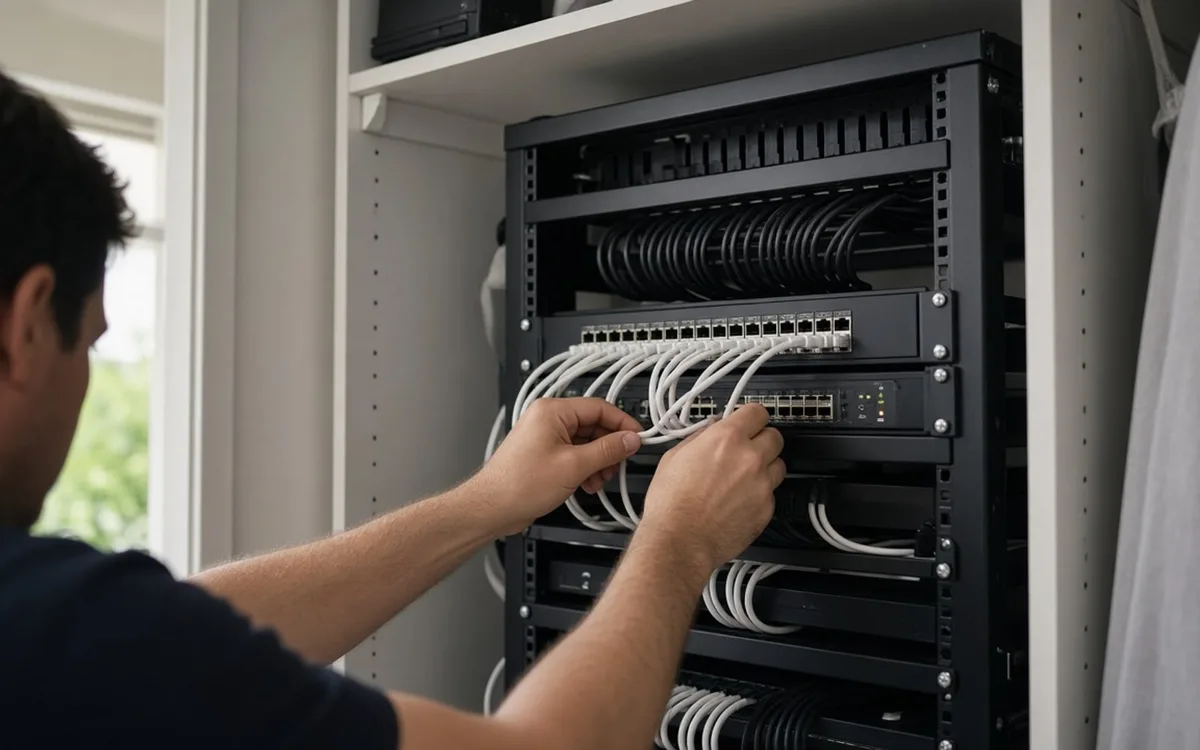
Whole-home automation connects lighting, climate, locks, cameras, shades and audio under one interface with scenes and schedules.
 Service guideSmart Lighting Control
Smart lighting control replaces switches and dimmers, or adds keypads and schedules, so rooms respond to scenes, timers and occupancy while the wall switch keeps working.
 Service guideHome Security & Surveillance
Home security and surveillance covers cameras, door and window sensors, motion detection, video doorbells and smart locks, with or without a monitoring service.
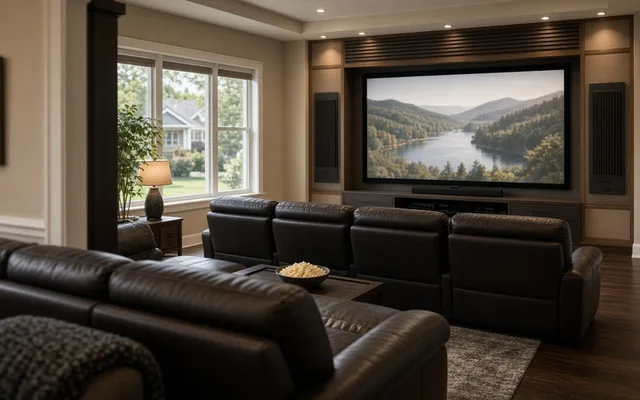 Service guideHome Theater & Audio
Home theater and audio installation covers dedicated theaters, living-room media setups and multi-room audio, including speakers, displays, receivers, cabling, equipment placement and the controls the household uses daily.
Homeowner polls
Deloitte found fewer than a third of consumers have committed to a single ecosystem.
No votes yet. Yours will be the first. · saved on this device
Matching is based on service area and scope, and installers agree to respond with a written estimate at no charge. Licensing, insurance, references and platform authorizations are for you to confirm directly with each installer before hiring, and the reviews page explains what to check. Treat a match as an introduction, not a recommendation, and compare at least two written proposals before deciding.
No. A request asks matched installers to respond about your project. You are free to decline every response, ask for changes, or go elsewhere. Availability, assessment fees for site visits, pricing and scheduling are set by each installer and must be confirmed with them before any work begins. Nothing on this site creates a contract.
Each figure carries its publication year and a link. The Angi benchmark behind the calculator was updated in March 2026; HomeGuide's tiers are from 2026; Today's Homeowner's price tables are marked as of January 2023, so we pair its labor rate with HomeAdvisor's June 2026 camera-installation figures. Prices vary by region and installer, and equipment prices change with product cycles, so treat every range as a planning figure and expect local estimates to land inside or near it rather than on it.
Because it remains the most rigorous public evidence on the question. LexisNexis compared 2,306 homes with automatic shutoff valves against a control group over a year before and after installation and found claims fell 96%. Newer marketing claims exist, but they rarely publish the sample and the comparison group. When a stronger study appears, the figure will be updated with the new source.
The underlying figures belong to their publishers, and each is linked so you can cite the original. Please cite the source, the year and the denominator as stated here rather than this site, and avoid turning an installed-stock figure into a purchase rate or a national range into a local price. That is the same discipline this site applies to itself.
Use the contact form and describe the page, the figure and the source you believe is correct. Corrections that come with a link are checked and applied quickly. Statistics are re-checked when the source publishes new data, and the source year on the page changes when the figure does.
Editorial staff working from the sources cited on each page, with the writing standard of a seasoned estimator: concrete numbers, trade-offs and the questions worth asking. No page is written or paid for by an installer or a device maker. When a page discusses a product category such as Matter or power-over-Ethernet cameras, it does so on the merits and names the limits.
 LocationsRegional planning notes
How climate, codes and prices change a project across U.S. regions.
 ArticlesPlanning articles
Cost guides, checklists and mistakes to avoid before you sign.
 ReviewsHow to read reviews
What genuine contractor reviews look like and what they leave out.
Tell us the size, the condition of what is there now, and what you want to change. Home Control Notes passes your request to independent local professionals, who reply with written, no-obligation estimates. The service is free to use.