Who holds the administrator accounts for your current devices?
No votes yet. Yours will be the first. · saved on this device
Loading...
Home Control Notes · Reviews
This site does not publish ratings or testimonials. Instead, this page explains how to read reviews of smart home installers elsewhere: what a genuine review contains, which patterns signal trouble, and how to verify a company through licensing, platform authorizations and references. The goal is to judge how an installer handles the network, the handover and the problems that appear later.
Reviews of smart home installers are unusually hard to read because the work is judged twice: on installation day, when everything is new and demonstrated by the installer, and six months later, when a scene stops working after a platform update. Most reviews are written on day one. Deloitte found 77% of adopters say devices improve their quality of life, yet 20% report frustration, and the difference often shows up only in the reviews written later.
What follows is a reading method rather than a verdict on any company. It applies to any review platform, and it pairs with the verification steps that no review can replace: license checks, insurance certificates and a conversation with a past client about the handover.
Specifics that only a customer would know: the platform installed, the number of rooms or cameras, a problem that came up and how it was resolved, and what happened when something failed later. A review that names the hub, mentions that the installer put cameras on a separate network, and describes the handover session is worth ten that say 'great job, very professional'. Look for reviews written months after installation, which are rarer and more informative, especially on updates and data: Deloitte's 2025 Connected Consumer Survey found 70% of consumers worry about the privacy and security of their personal data.
Homeowner polls
No votes yet. Yours will be the first. · saved on this device
 Service guideWhole-Home Automation
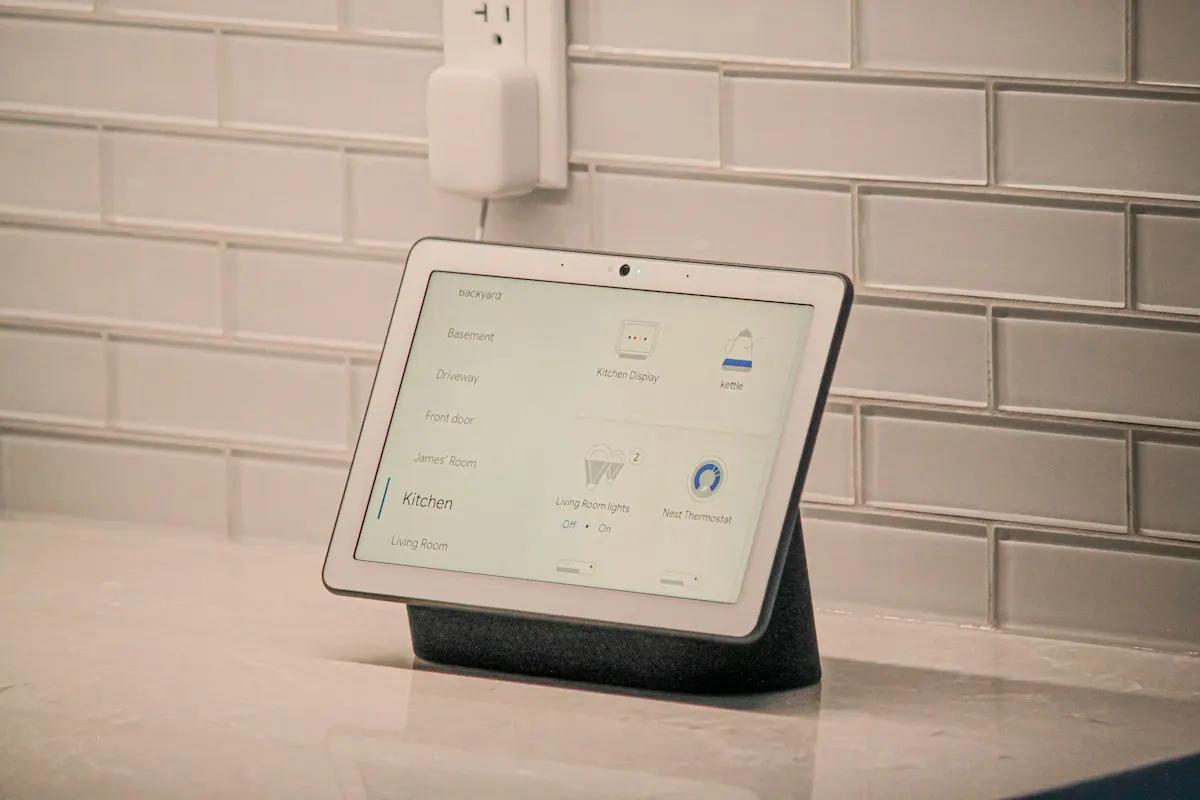
Whole-home automation connects lighting, climate, locks, cameras, shades and audio under one interface with scenes and schedules.
 Service guideSmart Lighting Control
Smart lighting control replaces switches and dimmers, or adds keypads and schedules, so rooms respond to scenes, timers and occupancy while the wall switch keeps working.
 Service guideHome Security & Surveillance
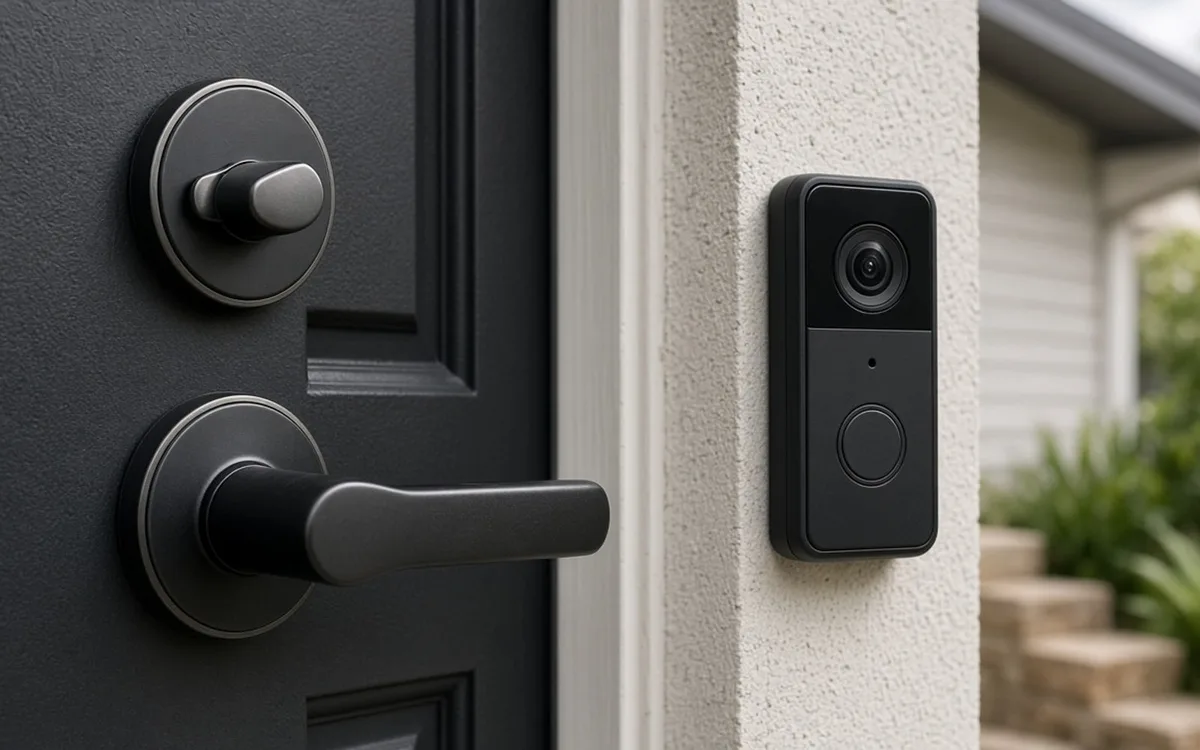
Home security and surveillance covers cameras, door and window sensors, motion detection, video doorbells and smart locks, with or without a monitoring service.
Tell us the size, the condition of what is there now, and what you want to change. Home Control Notes passes your request to independent local professionals, who reply with written, no-obligation estimates. The service is free to use.
Watch the balance of detail. Parks Associates found 52% of DIY users hit setup or connectivity issues, and professional installations have their own problems: a scene that needed a second visit, a doorbell transformer that had to be replaced, a dimmer that flickered. A company with only flawless reviews either filters them or has not done much complex work. Honest reviews of good installers mention a hitch and a fix.
Clusters of reviews posted the same week, reviews that repeat marketing phrases, and reviews that praise the sales process but never mention the system working are the usual signs of manufactured feedback. In negative reviews, look at the company's reply: a specific, calm response that explains what happened tells you more than the complaint. A reply that attacks the reviewer, or silence across many complaints, is the pattern to avoid.
Substantive complaints cluster around three things: the installer kept the administrator account, recurring fees such as monitoring at $30–$60/mo per SoFi were not disclosed, and support after the sale was slow or billed at surprise rates. Deloitte found 70% of consumers worry about connected-device privacy, and account control is the concrete version of that worry. If more than one review raises it, ask the installer directly how accounts are set up before you request a visit through the contact page.
Check the electrical license for any line-voltage work through the state licensing board, and ask for the low-voltage license where your state issues one. Ask for a certificate of insurance naming you for the project. If a dealer platform is proposed, confirm the installer's authorization directly with the platform maker; unauthorized installers cannot obtain support or programming tools. Ask for two references from projects of similar scope completed at least a year ago, and ask those references specifically about the handover and post-sale support.
Then compare the written proposal against the four questions on every service page: outage behavior, account ownership, recurring fees and how another installer could take over. An installer whose reviews are good and whose proposal answers those in writing is the combination to look for. The services hub shows what a complete proposal contains for each scope.
Ask what broke in the first year and how long the fix took. Ask whether they hold the owner account on every device, and whether they can make a schedule change without calling anyone. Ask what the monthly fees turned out to be versus what was proposed, and whether the installer swapped in cheaper parts to hit a price; Deloitte found 79% of consumers call device interoperability important, and a reference should know whether swapped parts still work together. Ask whether the documentation would let another installer take over. Their answers describe the part of the job that reviews written on installation day cannot see, and they take ten minutes.
Because ratings are easy to manufacture and hard to verify, and because a matching resource that rated the people it introduced would have an obvious conflict. Instead, this page explains how to read reviews elsewhere and how to verify an installer through licensing, insurance, platform authorizations and references. Those checks take an hour and tell you more than a star count.
Only as a list of the kinds of projects they do. Testimonials on a company's site are selected by the company and rarely dated. Use them to see whether the installer handles your scope, then read third-party reviews for balance and call references for the post-sale story. A company that offers references without being asked is showing confidence in its handover.
Little on its own, unless it describes a structural problem such as the installer keeping the administrator account or undisclosed monthly fees. One-off complaints about scheduling or a delayed part happen to everyone. Read the company's reply and look for the same issue elsewhere. Patterns matter; isolated events do not.
Small integrators often do excellent work with a handful of clients a year, so a thin review history is not disqualifying. Lean harder on verification: license, insurance, platform authorization and references from similar projects. Ask to see documentation from a past project with the client's details removed; the quality of a wiring diagram and account list says a great deal.
It depends on the platform. Dealer-only systems require an authorized installer for programming, so authorization is mandatory there. For open platforms and Matter-based systems, an independent integrator with strong network skills may be the better fit and leaves you freer to change installers later. In either case, verify authorization claims with the platform maker rather than taking them from a website badge.
Ask how they would handle a house with 17 devices or more, which Parks Associates says is now average for an internet household. A strong answer mentions a router sized for the client count, wired backhaul to access points, a separate segment for cameras, and a hub so lighting and sensors stay off Wi-Fi. A weak answer is a mesh kit and a shrug. Reviews that mention connectivity problems after installation point to the weak answer.
Write a review months later, not on installation day, and describe the platform, the scope, what broke and how it was handled, and whether you hold the accounts. That is the review this page tells people to look for. It helps the installer more than a generic compliment and it helps the next reader decide.
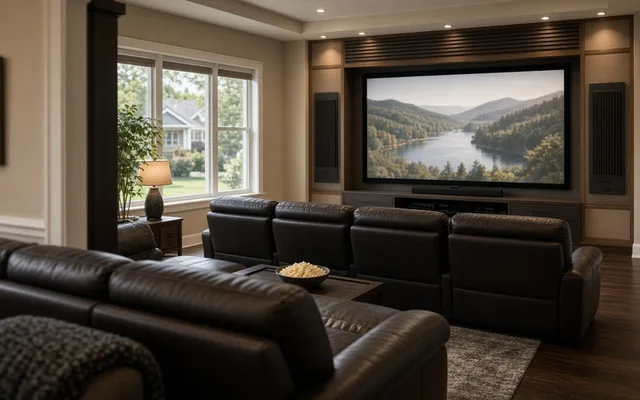
Home theater and audio installation covers dedicated theaters, living-room media setups and multi-room audio, including speakers, displays, receivers, cabling, equipment placement and the controls the household uses daily.