What total budget are you planning for the project?
Angi's 2026 consumer benchmark averages $771; HomeGuide's whole-home tier is $5,000 to $15,000.
No votes yet. Yours will be the first. · saved on this device
Loading...
Home Control Notes · Whole-Home Automation cost guide
Whole-home automation in 2026 ranges from Angi's $771 average for a consumer starter system to HomeGuide's $2,000 to $15,000 or more for hub-based and dealer-integrated projects. Labor at $80 to $100 an hour per Today's Homeowner, programming time, network upgrades and support plans explain most of the spread. Tier and subsystem count move the total more than device count.
A whole-home automation price bundles four different things: devices, installation labor, programming and ongoing support. Retail device prices are easy to find, which is why homeowners anchor on them and are surprised when a quote runs several times higher. The difference is not markup alone. It is the network, the wiring, the hours spent making a dozen devices behave as one system, and the documentation that lets you live with it afterward.
This page focuses on cost only: how the tiers price, what each hour of labor buys, which add-ons change the total, how the schedule affects cost, what to cut first when a quote runs high, and three sample budgets built from published figures. The cost table and calculator on this page cover the line-item ranges; the sections below explain how they combine.
| Item | Low | High | Unit | Notes |
|---|---|---|---|---|
| Consumer starter system (hub, thermostat, doorbell, lighting) | $201 | $1,519 | flat | Angi 2026 benchmark |
| Hub-based automation, select rooms | $2,000 | $5,000 | flat | HomeGuide 2026 |
| Whole-home integration, mid-range | $5,000 | $15,000 | flat | HomeGuide 2026 |
| Installation labor | $80 | $100 | per hour | Today's Homeowner |
| Rewiring for a full system | $2,000 | $10,000 | flat | Depends on home size |
| Smart thermostat, installed | $200 | $500 | per unit | Vivint 2026 |
| Network upgrade (router, access points, VLAN) | $500 | $2,500 | flat | Typical integrator scope |
The consumer tier uses retail devices on a shared platform, installed and paired by a pro. Angi's 2026 guide puts the average at $771, typically covering a hub or speaker, thermostat, doorbell and some lighting within a $201 to $1,519 range. The hub-based tier adds a local controller, bridged protocols and scenes that run offline, and HomeGuide's 2026 range for automation in selected rooms is roughly $2,000 to $5,000. The dealer tier adds a processor, keypads and a single interface across subsystems.
HomeGuide's full span is $2,000–$15,000+, with mid-range whole-home integration at $5,000 to $15,000 and custom systems above that. The calculator's tier multipliers follow those ranges. The jump between tiers is mostly labor and programming: a dealer system can spend more hours on scenes, integrations and keypad engraving than on hanging hardware. The platform comparison weighs whether that programming earns its cost for your household.
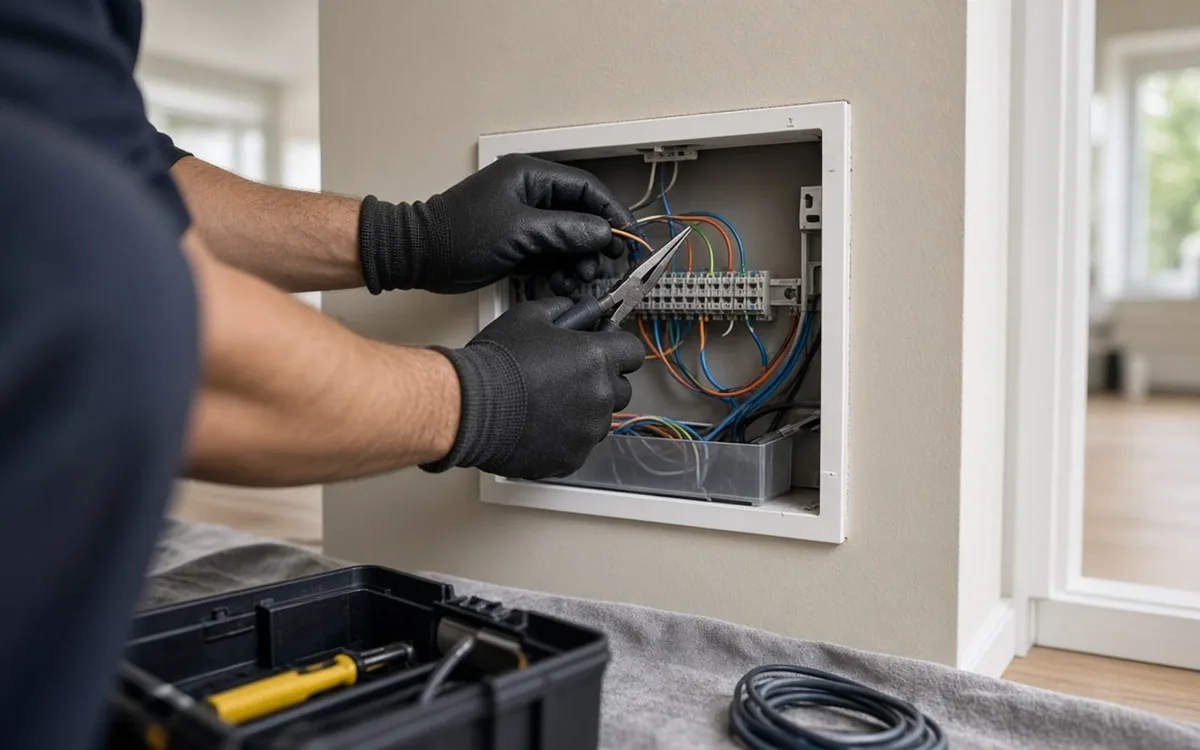
Today's Homeowner puts smart home installation labor at $80–$100/hr at January 2023 prices; HomeAdvisor's 2026 rate for camera installers, $50 to $100 an hour, suggests the range has held. On a consumer-tier job, labor is a modest share because pairing retail devices is quick. On hub and dealer tiers, labor becomes the largest line once cable pulls, switch replacements, network setup and programming are counted. Programming is often underestimated: scenes, schedules, integrations between locks, lights and climate, and testing each one with the router unplugged all take time.
Ask for labor split three ways: physical installation, programming and project management. Then ask for the hourly rate and minimum charge for changes after handover. That last figure determines the lifetime cost. A system where the household can edit scenes and schedules in an app costs less to own than one where every change needs a paid visit, even if both were installed for the same price.
Network upgrades come first. A router, access points, a switch and a separate segment for cameras and appliances often add a meaningful sum, and they decide whether the rest works. Rewiring comes next in older homes: missing neutrals, new switch boxes and cable pulls through finished walls add labor at every point. Smart thermostats are a common add-on; Vivint's 2026 figure is $200–$500 installed, with the device alone around $100 to $300.
Water leak detection with an automatic shutoff valve is worth pricing, since a LexisNexis Risk Solutions study found a 96% drop in water-damage claims after installation, though that study dates from 2020. Other add-ons include shades, garage controllers, smart appliances and whole-home audio. The security cost guide prices cameras and locks in detail. Parks Associates found only 3% of internet households buy a smart appliance in a given year, so most integrate appliances at replacement time rather than as a separate line.
Timing changes cost more than most homeowners expect. Work done during a remodel, with walls open and an electrician already on site, costs a fraction of the same work in a finished house, because cable pulls and new boxes take minutes rather than hours. Coordinating with other trades also avoids repeat trips. A tight deadline raises cost in the other direction: rush scheduling, overtime and expedited equipment orders all show up in the price.
Phasing spreads cost but can raise the total if each phase needs a separate trip for wiring. The efficient approach is to design the whole system up front, do all the wiring and network work in the first phase, then add devices in later phases at mostly equipment cost. Angi's 2025 Home Spending Pulse found 23% of surveyed homeowners who hired a pro started projects early to get ahead of price increases, and equipment pricing has been volatile enough that locking a quote has value.
Cut convenience before infrastructure. Keep the network, the hub and any wiring that needs open walls, because they are cheapest now and most expensive to add later. Keep documentation and handover, because they protect everything else. Then reduce the number of rooms in the first phase, swap custom keypads for standard smart switches, and move shades, audio zones and accent lighting to a later phase.
Consider the tier. If the household can manage updates and scenes in an app, a hub-based system may deliver most of the daily value of a dealer system. Reuse working devices that support Matter or an open protocol rather than replacing them. Finally, question any subscription bundled into the installation price; SoFi's 2025 range for monitoring alone is $30–$60/mo, and the ten-year total of a few such plans can exceed the installation.
These sample budgets show how published ranges combine. A starter budget covers a hub, a thermostat, a doorbell, a lock and lighting in two rooms on a consumer platform. A mid-range budget adds a local hub, a network upgrade, lighting across the main floor and cameras. A full budget uses a dealer processor across lighting, climate, security, shades and audio.
Compare your plan with the budget that matches its scope, then send it through the estimate request page or use the calculator to adjust for your control-point count and wiring complexity. Deloitte's 2025 survey found households spent $896 on connected devices in a year, a reminder that many homes already own part of the starter scope and can integrate it.
| Sample scope | Anchor figure | Main cost drivers |
|---|---|---|
| Starter: consumer platform, a few rooms | Angi 2026: $771 average | Devices, pairing, one app setup |
| Mid-range: local hub, main floor, cameras | HomeGuide 2026: $2,000–$5,000 selected rooms | Network upgrade, switch labor, scene programming |
| Full: dealer processor, several subsystems | HomeGuide 2026: $5,000–$15,000+ | Programming, keypads, rack, support plan |
By the numbers
Planning figures from published U.S. sources; every card links to where the number came from.
$771
average cost of a consumer smart home system, range $201–$1,519 (Angi, 2026)
Angi's cost guide, updated March 2026, covers a basic connected setup such as a hub, thermostat, lighting and doorbell. Bespoke whole-home integration, new wiring, theater equipment and recurring support are different projects.
Angi, How Much Does a Smart Home System Cost (2026)$2,000–$15,000+
HomeGuide smart home tiers: select rooms, whole-home, fully custom (2026)
HomeGuide's tiers reflect how far integration extends: $2,000–$5,000 for select rooms, $5,000–$15,000 for whole-home integration, and $15,000 and up for fully custom systems.
HomeGuide, How Much Does a Smart Home Cost (2026)$80–$100/hr
professional smart home installation labor rate (prices as of January 2023)
Today's Homeowner notes rewiring a whole home typically costs $2,000–$4,000 and can reach $10,000 in larger homes, which is why retrofit projects should be scoped room by room and labor listed separately. Its prices are marked as of January 2023; HomeAdvisor's June 2026 camera-installation labor rate of $50–$100 an hour is a newer cross-check.
Today's Homeowner, How Expensive Are Smart Homes (2023)$200–$500
smart thermostat cost professionally installed ($100–$300 device only)
Vivint's 2026 pricing guide also reports the average cost to fix a DIY installation mistake is $188, roughly the price of the professional install itself.
Vivint, How Much Does Home Automation Cost (2026)The calculator uses the same smart home automation benchmarks as this guide. Set the size and tier, then request a written estimate to check it against a real proposal.
Homeowner polls
Angi's 2026 consumer benchmark averages $771; HomeGuide's whole-home tier is $5,000 to $15,000.
No votes yet. Yours will be the first. · saved on this device
Deloitte found fewer than a third of consumers have committed to a single ecosystem.
No votes yet. Yours will be the first. · saved on this device
No votes yet. Yours will be the first. · saved on this device
It is accurate enough to set a working range and to judge whether a quote is in the expected territory. It uses Angi's 2026 benchmark for the base rate and HomeGuide's tiers for multipliers. It cannot see your walls, panel or router, so treat its output as a bracket and use written proposals to set the final number.
Because it is skilled labor that scales with the number of scenes, integrations and keypads, and every interaction must be tested. A system with lighting, shades, audio, climate and security on one interface has many combinations to program and check. Ask for programming hours as a separate line and for a written list of scenes and schedules included.
It depends on the plan's annual price and how long you keep it. Multiply the annual fee by the years you expect to keep the system, then compare that with the likely cost of paying hourly for occasional changes. Some households drop the plan after the first year once the system settles, if the contract allows it.
Usually, if they support Matter or an open protocol the proposed hub can use. Reusing a working thermostat, doorbell or locks avoids equipment cost, though integration still takes labor. Devices locked to one maker's app may cost more to integrate than to replace. Ask the installer to list which existing devices will be kept.
It varies with house size, the number of access points and whether new cable is needed. The calculator treats it as an optional add-on sized for twice today's device count. A small home might need a better router and a node or two; a large home with cameras may need several wired access points and a managed switch. Ask each bidder to itemize it.
On consumer and many hub-based systems, yes. Once devices are installed and paired, scenes and schedules can be built in the app, which saves programming hours. On dealer platforms, programming tools are usually restricted to authorized installers. Decide before signing whether you want to own programming, because it changes which tier fits.
Commonly by milestone: a deposit to order equipment, a payment after rough-in and wiring, another after devices are installed, and a final payment after programming and handover. Keep a meaningful share for the final milestone, because documentation and account transfer are the steps most often left incomplete. Check your state's rules on residential deposits.
 Smart Lighting Control · Cost guideWhat smart lighting control costs, switch by switch and room by room
Today's Homeowner puts fully automated whole-home lighting at $1,000 to $5,000, with electrician labor at $80 to $100 an hour.
 Home Security & Surveillance · Cost guideWhat a home security and surveillance system costs to install and to keep
Professionally installed security cameras average $1,289 in 2026, with most projects between $589 and $2,040, according to HomeAdvisor.
 Home Theater & Audio · Cost guideWhat home theater and multi-room audio cost in 2026
A basic installed 5.1 home theater costs $2,092 to $3,237 according to Homewyse's September 2026 figures, and a fully equipped living room runs $2,000 to $4,000.
 Service guideWhole-Home Automation
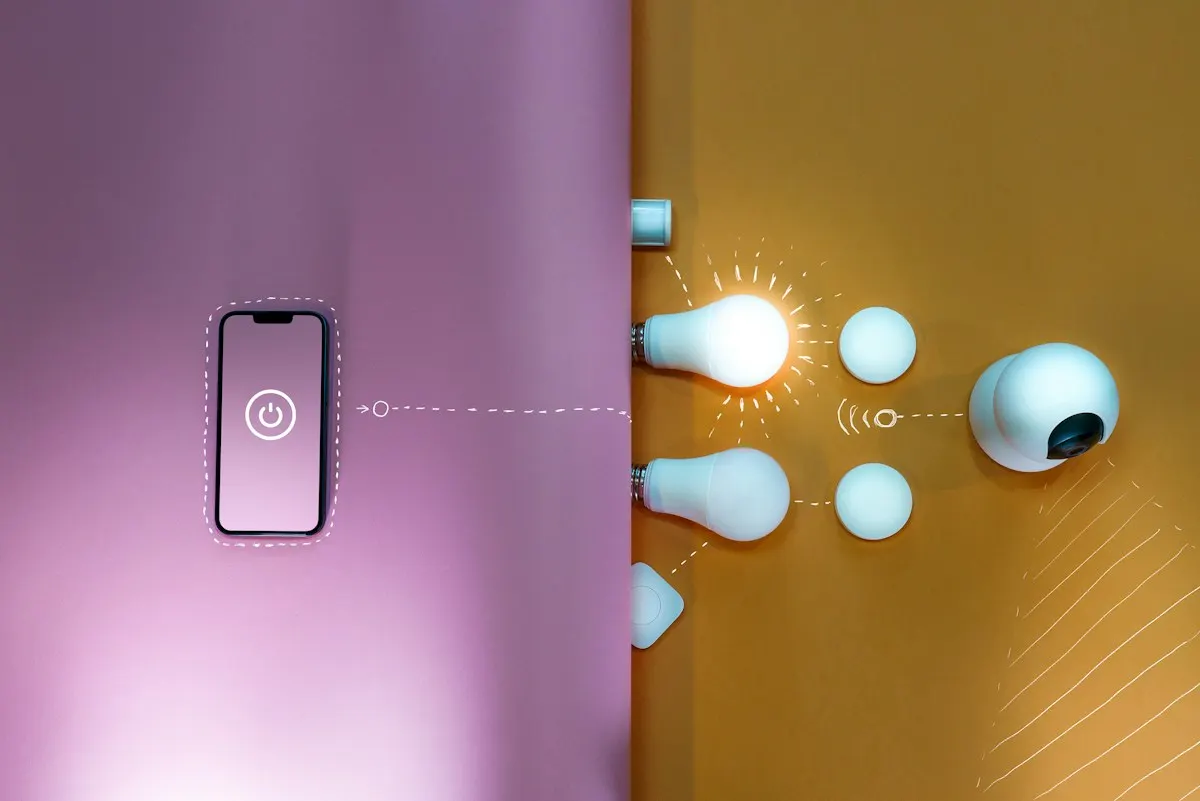
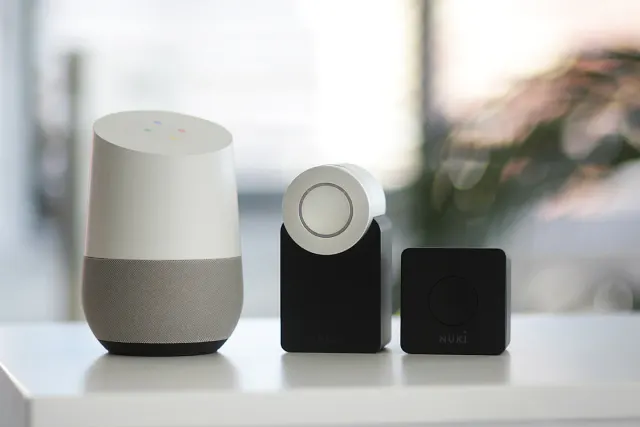
Whole-home automation connects lighting, climate, locks, cameras, shades and audio under one interface with scenes and schedules.
Service guideSmart Lighting ControlSmart lighting control replaces switches and dimmers, or adds keypads and schedules, so rooms respond to scenes, timers and occupancy while the wall switch keeps working.
Service guideHome Security & SurveillanceHome security and surveillance covers cameras, door and window sensors, motion detection, video doorbells and smart locks, with or without a monitoring service.
 Free toolSmart home cost calculator: size a budget by control points
Size, material tier and complexity in, a realistic budget range out.
 Free toolSmart home comparisons: the five decisions that shape the project
Side-by-side tables for the decisions that change the price most.
 Free toolSmart home readiness quiz: do you know the details installers will ask about?
10 questions that show what you already know and what to check next.
 Free toolSmart home polls: how other homeowners weighed the same decisions
See what other planners chose and add your vote.
Tell us the size, the condition of what is there now, and what you want to change. Home Control Notes passes your request to independent local professionals, who reply with written, no-obligation estimates. The service is free to use.