Which monitoring approach fits your household?
SoFi's 2025 guide puts professional monitoring at $30 to $60 a month.
No votes yet. Yours will be the first. · saved on this device
Loading...
Home Control Notes · Permits
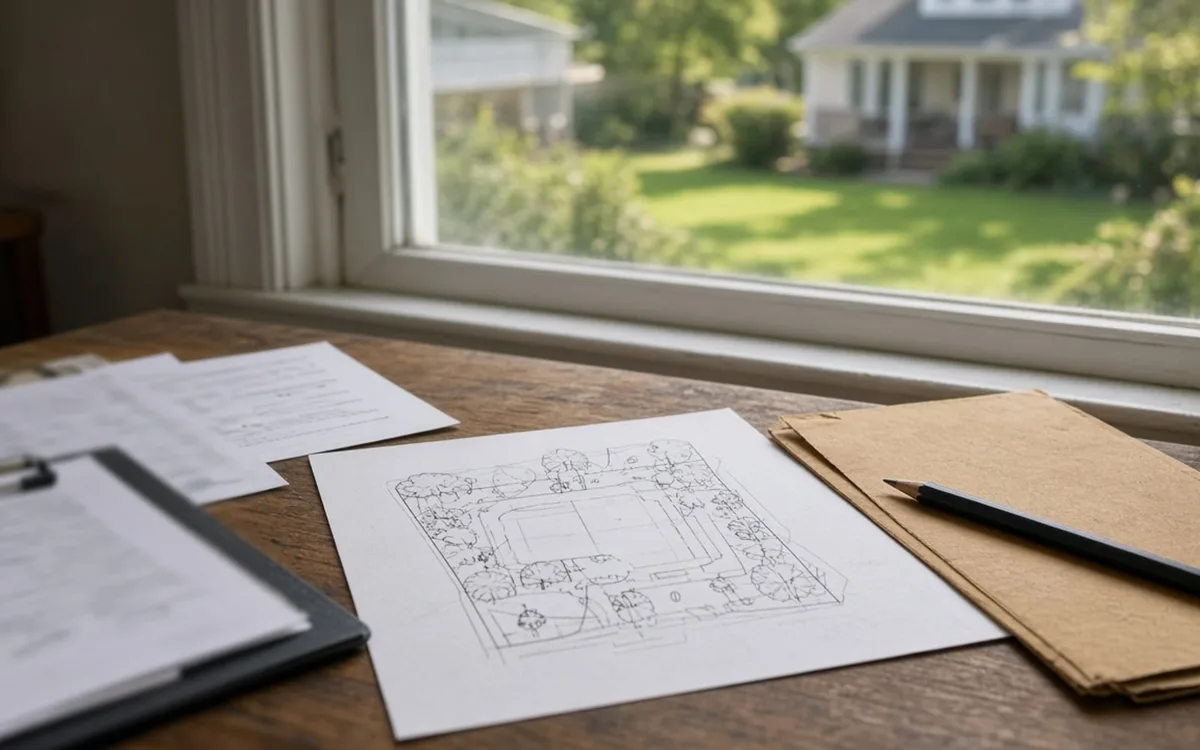
Rules vary by city, county and state, so confirm locally. Typically, plugging in devices and swapping bulbs needs no permit, while new circuits, added boxes, panel work and some hardwired devices need an electrical permit and a licensed electrician. Low-voltage cabling is licensed separately in some states. Monitored alarms often need registration, and HOAs may regulate exterior cameras and lighting.
By Home Control Notes editorial · Updated 2026-09-25
Most smart home work sits in a gray zone between plugging in a gadget and remodeling a room. That is why homeowners are often surprised by permits, in both directions: some assume a whole-home lighting retrofit needs no review, others assume a camera needs a permit when it rarely does. The honest answer is that the rules depend on where you live. Codes are adopted and amended by states and local jurisdictions, and licensing for low-voltage work varies more than almost any other trade.
This guide explains the common patterns so you can ask the right questions. It covers which work typically triggers an electrical permit, how low-voltage and alarm rules differ, what inspections look like, how homeowners associations fit in, and what happens when work is done without the required permit. Treat it as a map of the questions, then confirm the answers with your local building department and the installer who will pull the permit.
Line-voltage electrical work in houses is governed by the National Electrical Code (NFPA 70), usually adopted by the state with local amendments, and by the electrical chapters of the International Residential Code in jurisdictions that use it. Adopted editions lag the newest publication by several years in many places, so the edition your inspector enforces may not be the latest. Your building department can tell you which edition and amendments apply.
Several code requirements touch smart home projects directly. Newer editions require a neutral conductor at most switch locations, which matters when you replace a switch with a smart one in a house wired before that rule. Box fill limits cap how many conductors and devices fit in a box, and smart dimmers are bulkier than toggles. Power-limited low-voltage circuits for sensors, speakers and data have their own separation and cable-rating rules, including rated cable in air-handling spaces.
Permit triggers vary locally, but a common pattern holds. Adding a new circuit, such as a dedicated circuit for an equipment rack or a car charger, typically needs a permit. So does adding new outlets or switch boxes, running new line-voltage wire, replacing or upgrading a panel, and installing hardwired devices that require new wiring. Many jurisdictions exempt like-for-like replacement of a switch or receptacle on an existing circuit, which is why a simple smart switch swap is often permit-free. Car chargers are the fastest-growing trigger: Zillow counted +34% more listings mentioning one in 2024.
The gray areas are where to ask. Pulling a new neutral to a switch box, relocating a box, replacing a doorbell transformer and adding a hardwired smoke or carbon monoxide alarm may or may not need a permit depending on your jurisdiction. Some states allow homeowners to pull permits for their own single-family homes; others require a licensed electrician for most line-voltage work, billed at around $80–$100/hr per Today's Homeowner. Ask the installer to name every permit they expect and who files it, as the lighting control page recommends for switch retrofits.

Low-voltage work covers network cable, speaker wire, camera cable, sensor wiring and similar power-limited circuits. Some states license low-voltage or limited-energy contractors separately from electricians, some fold it into electrical licensing, and some do not license it at the state level at all. Local jurisdictions may add their own requirements. Permits for low-voltage work in houses are less common than for line-voltage work, but some cities require them, particularly for new construction or fire and security alarm systems.
Even where no permit applies, code rules still do. Low-voltage cable should not share boxes or conduit with line-voltage wiring without an approved barrier, penetrations through fire-rated assemblies, such as the wall between an attached garage and the house, must be sealed with an approved firestop, and cable run through return-air spaces must carry the right rating. The reviews page explains how to verify an installer's electrical and low-voltage licenses with the state board.
Many cities and counties require an alarm permit or registration for systems that can trigger police or fire dispatch, and many fine repeated false alarms. That rule usually applies to monitored intrusion systems, not to cameras or doorbells. SoFi's 2025 range for monitoring is $30–$60/mo, and the monitoring company can typically tell you whether local registration is required. Some jurisdictions also regulate who may install fire alarm equipment.
Smoke and carbon monoxide alarms are governed by the residential code, which in the IRC requires alarms in specified locations and, in new work, interconnection so one alarm sounds all of them. Adding smart alarms usually does not trigger a permit when replacing existing units, but a remodel that needs a permit may require the alarms to be brought up to current rules, and the upgrade can pay back: SmartFinancial puts typical carrier discounts for smart home devices at 5–13%, from Allstate's 5% to Hippo's 10–13%. Cameras rarely need a permit, though state laws on audio recording and on filming areas where people expect privacy apply.
Homeowners associations commonly regulate what can be mounted on the exterior: camera placement and visibility, floodlights, exterior speakers, antennas and conduit on facades. Many require architectural review before installation. Some local ordinances limit exterior lighting glare or direction under dark-sky rules, and noise rules apply to outdoor audio. The federal over-the-air reception devices rule limits HOA restrictions on certain antennas and satellite dishes, but it does not cover cameras or lights.
Check the covenants before finalizing the plan, especially for camera angles that view a neighbor's property or a shared area. The privacy concern poll shows how many households worry about exactly this. Deloitte found 70% of consumers worry about connected-device privacy, and that concern extends to neighbors. Aiming cameras at your own entries, driveway and yard rather than beyond the property line avoids most disputes.
For permitted electrical work, the usual sequence is a rough-in inspection with walls open, after boxes are set and wire is pulled but before insulation and drywall, followed by a final inspection after devices are installed and powered. Small jobs such as a single new circuit may need only a final. Panel work may require coordination with the utility. The inspector checks conductor sizing, box fill, grounding, arc-fault and ground-fault protection where required, and separation from low-voltage cabling.
Plan the schedule around inspections rather than build days. A cable pull that closes a wall before the rough-in inspection may have to be reopened. Ask the installer when each inspection will be requested, how long local scheduling usually takes, and whether drywall repair after inspection is in their scope. Keep the signed-off permit card in the handover folder with the device list and network diagram, because a buyer's inspector may ask for it.
The consequences arrive later and cost more than the permit would have. Jurisdictions can require after-the-fact permits, sometimes with added fees, and may require walls to be opened so an inspector can see the work. Insurers may question claims tied to unpermitted electrical work, a poor trade when carriers offer smart-device discounts of 5–13% according to SmartFinancial. At sale, many states require disclosure of known unpermitted work, and a buyer's inspector who finds new circuits without a permit record can delay closing or reduce the offer.
Low-voltage work without a required permit carries similar, if usually smaller, risks. The simplest protection is to make permits part of the contract: the installer names each permit, pulls it in the correct license holder's name, schedules inspections and hands over the sign-off. Ask about this on the estimate request so every bidder prices it. A bid that is lower because it skips permits is not a lower price for the same work. Nationwide's smart home program offers up to 10% off fire, theft and water coverage, a saving that assumes a proper installation; permits are the wrong place to economize.
Homeowner polls
SoFi's 2025 guide puts professional monitoring at $30 to $60 a month.
No votes yet. Yours will be the first. · saved on this device
No votes yet. Yours will be the first. · saved on this device
Often not, if it is a like-for-like replacement on an existing circuit and the box already has a neutral. Many jurisdictions exempt device replacement from permits. Adding a neutral, enlarging a box or running new wire usually changes that. Rules differ by location and by whether a homeowner or a contractor does the work, so confirm with your local building department before assuming.
In many jurisdictions a homeowner may pull a permit for work on their own single-family residence, usually after signing an affidavit and agreeing to pass the same inspections. Some places restrict this or exclude certain work such as panel changes. If a contractor does the work, the contractor normally pulls the permit under their license, and a homeowner permit should not be used to cover hired work.
Almost always. Both usually require a new dedicated circuit, and new circuits are one of the most consistent permit triggers. The electrician should check panel capacity, pull the permit and schedule the inspection. Some utilities also want notification for large new loads. Plan the circuit early, because a full panel can turn a simple addition into a larger project.
There is no single rack rule, but general code requirements apply: working clearance in front of the electrical panel, ventilation for heat-producing equipment, rated cable in air-handling spaces and firestopping through rated walls. Placing a rack in front of a panel or inside a return-air closet causes inspection problems. Ask the installer to show the rack location on the plan with the circuit that feeds it.
Yes, and they are set by state law. Some states require consent from everyone in a conversation before it is recorded, which can make an audio-enabled camera a legal issue indoors or near a shared walkway. Many homeowners switch off audio recording on exterior cameras for that reason. Check your state's rules and tell household workers, such as nannies or cleaners, which cameras operate indoors.
Some do, and many regulate exterior devices in general through architectural review. A doorbell mounted at the door is often allowed without review, while floodlight cameras, conduit on the facade or cameras viewing common areas may need approval. Read the covenants or ask the management company before ordering, and keep the approval letter with the project records.
The permit number and the final inspection sign-off, either the signed permit card or a printout from the jurisdiction's permit portal. Keep it with the device list, network diagram and programming export. A future buyer, insurer or electrician may ask for it, and retrieving records years later from a building department is slower than filing them now.
It depends on the house and the work. New construction and many remodels under permit must meet current code, which generally calls for hardwired, interconnected alarms with battery backup. Replacing existing hardwired alarms requires hardwired replacements. In older homes with battery alarms, adding wireless interconnected smart alarms is usually allowed, but local fire codes vary, so ask the building or fire department.
 Service guideSmart Lighting Control
Smart lighting control replaces switches and dimmers, or adds keypads and schedules, so rooms respond to scenes, timers and occupancy while the wall switch keeps working.
 Service guideHome Security & Surveillance
Home security and surveillance covers cameras, door and window sensors, motion detection, video doorbells and smart locks, with or without a monitoring service.
 Service guideHome Theater & Audio
Home theater and audio installation covers dedicated theaters, living-room media setups and multi-room audio, including speakers, displays, receivers, cabling, equipment placement and the controls the household uses daily.
 Service guideWhole-Home Automation
Whole-home automation connects lighting, climate, locks, cameras, shades and audio under one interface with scenes and schedules.
 PlanningPlanning a smart home project: routines, network and handover first
Plan a smart home by starting with the routines you want to change, then listing every device you own and intend to add, sizing the network for that count, deciding what must work without the internet, and agreeing in writing who owns each account.
 CostsWhat a smart home costs in 2026, from a starter kit to a dealer system
In 2026 a consumer starter system averages about $771 installed according to Angi, while HomeGuide puts hub-based and dealer-integrated systems at $2,000 to $15,000 or more.
 MaterialsChoosing smart home devices, protocols and platforms that age well
Pick the platform and protocol before the devices.
 Free toolSmart home cost calculator: size a budget by control points
Size, material tier and complexity in, a realistic budget range out.
 Free toolSmart home comparisons: the five decisions that shape the project
Side-by-side tables for the decisions that change the price most.
 Free toolSmart home readiness quiz: do you know the details installers will ask about?
10 questions that show what you already know and what to check next.
 Free toolSmart home polls: how other homeowners weighed the same decisions
See what other planners chose and add your vote.
Tell us the size, the condition of what is there now, and what you want to change. Home Control Notes passes your request to independent local professionals, who reply with written, no-obligation estimates. The service is free to use.